What Is a High-Precision Facelift? Dr Peter Callan Explains His Approach to Younger Facelift Patients
Why younger facelift patients demand even greater surgical precision, how facial identity is preserved, and when surgery may not be the right choice.
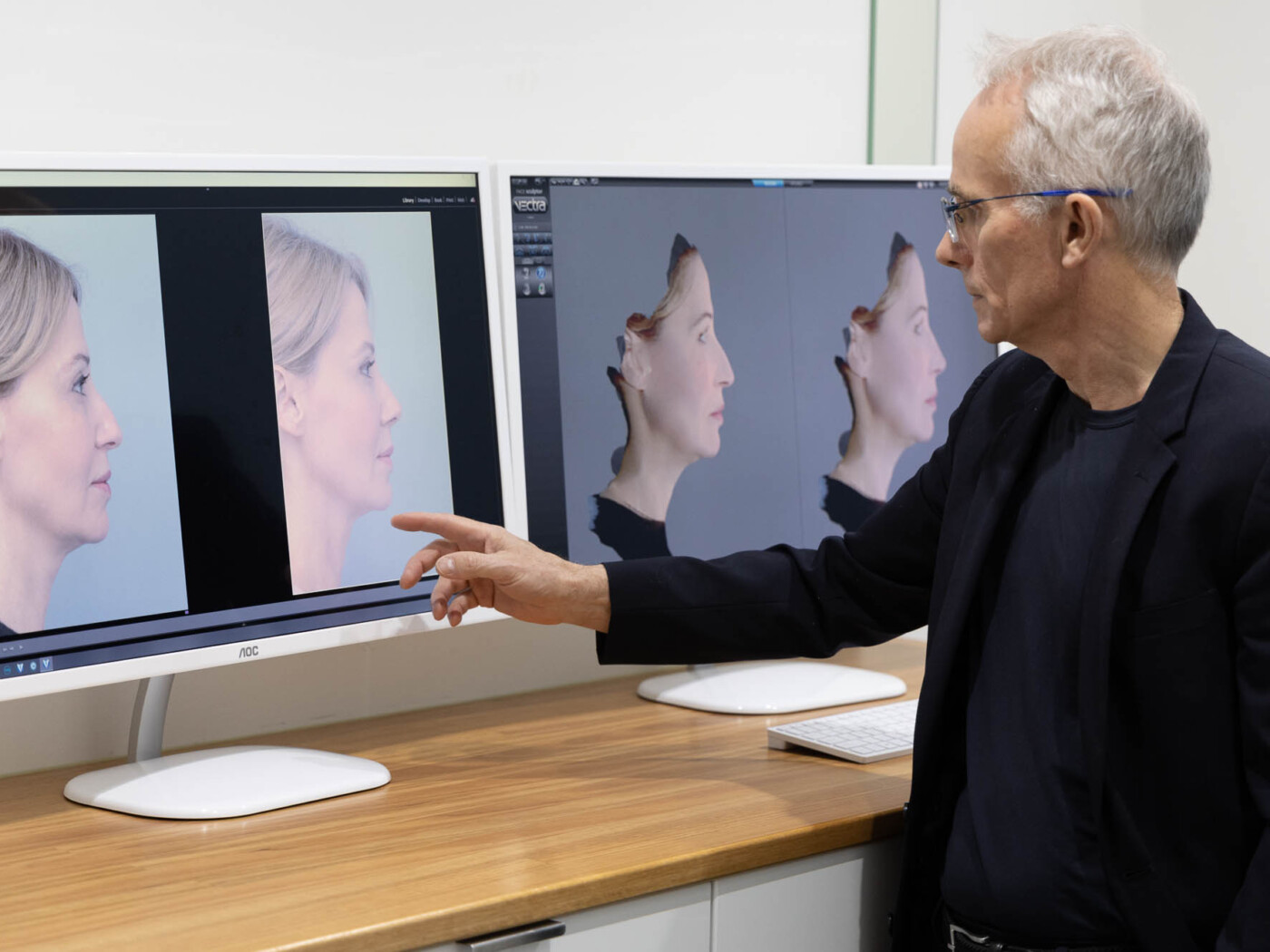
Facelift surgery has long been associated with more advanced signs of facial ageing, and for many patients that remains true. Increasingly, though, younger patients are choosing to have one and often with relatively subtle changes and very specific concerns they would like to address. For these patients, the goal is not to create a different appearance. Instead, surgery requires careful planning to address individual concerns while maintaining the features, proportions and characteristics that define each person's face. Dr Peter Callan refers to this as the “high-precision facelift”. A term describing patients where the margin for error is narrower, so the planning and execution of the surgery must be correspondingly precise. Because these patients often have less ageing change to address, there is less room for any misinterpretation — which is why precision, restraint and attention to detail are essential.
What is a “high-precision facelift”?
The term high-precision facelift refers to patients where the margin for error is smaller than average. There is less ageing change to work with, so small differences in planning or technique can have a greater influence on the final result.
These patients often present with relatively subtle signs of facial ageing but have specific concerns they would like to address. A facelift in this situation requires absolute attention to detail to ensure those concerns are treated while maintaining the person’s identity and facial characteristics.
Patients with fine facial features or delicate skin require careful planning and precision. The aim is to address areas of concern while preserving facial proportions and avoiding changes that make the face appear altered.
Why do younger facelift patients require a different surgical approach?
Younger patients often have specific facial characteristics and proportions that are important to preserve. They also tend to have good skin quality and strong underlying facial structure, both of which can play a significant role in the end result when the surgery is planned around them.
There is a difference between looking enhanced and looking as though surgery has been performed.
A successful facelift should consider how the face is perceived as a whole. Ideally, the changes are subtle enough that the focus is not on the surgery itself, but on the overall balance of the face.
The improvements may be most apparent when comparing before and after photographs, rather than being immediately noticeable in everyday interactions.
How do you enhance the face while ensuring patients still look like themselves?
This is the key consideration in a high-precision facelift.
The aim is to address specific anatomical changes while preserving the individual characteristics that make each person recognisable.
Changes may involve improving neck definition, refining the jawline, addressing volume changes around the face, or considering the upper and lower eyelid areas.
Often, facial angles and proportions play an important role. As the face changes over time, these relationships can alter. Carefully addressing these changes can help restore balance while maintaining the patient’s individual features.
Why is surgical restraint so important in facelift surgery?
Restraint is important in every facelift, regardless of age. The concept of overcorrecting does not align with my surgical philosophy.
The aim is to achieve balanced, consistent outcome that will age well over time rather than creating unnecessary tension or exaggeration in the face.
Many patients worry that everyone will immediately know they’ve had surgery. In reality, when facial proportions remain harmonious and the person’s identity is preserved, even significant improvements may simply be perceived as looking refreshed rather than looking “operated on.”
Are there times when you would recommend against facelift surgery?
Absolutely. There are situations where the potential outcome does not justify the risks associated with surgery.
Part of my role is helping patients understand not only what can be done, but whether surgery is actually the most appropriate option.
Every consultation involves an honest discussion about anatomy, goals, expectations and whether a facelift is likely to provide meaningful results.
Sometimes the right recommendation is to wait, continue monitoring the ageing process or consider alternative approaches.
The Importance of Individual Assessment
Every face ages differently, which is why there is no single “ideal” age for facelift surgery.
For some patients, surgery may be appropriate earlier than expected. For others, waiting may provide a better balance between potential outcome and surgical risk.
The decision is never based on age alone. Instead, it is based on anatomy, facial structure, skin quality, medical history and the individual’s goals.
If facelift surgery is being considered, a consultation allows these factors to be assessed carefully before any decisions are made.