The Face Ages in Predictable Ways—A Great Facelift Reverses Them
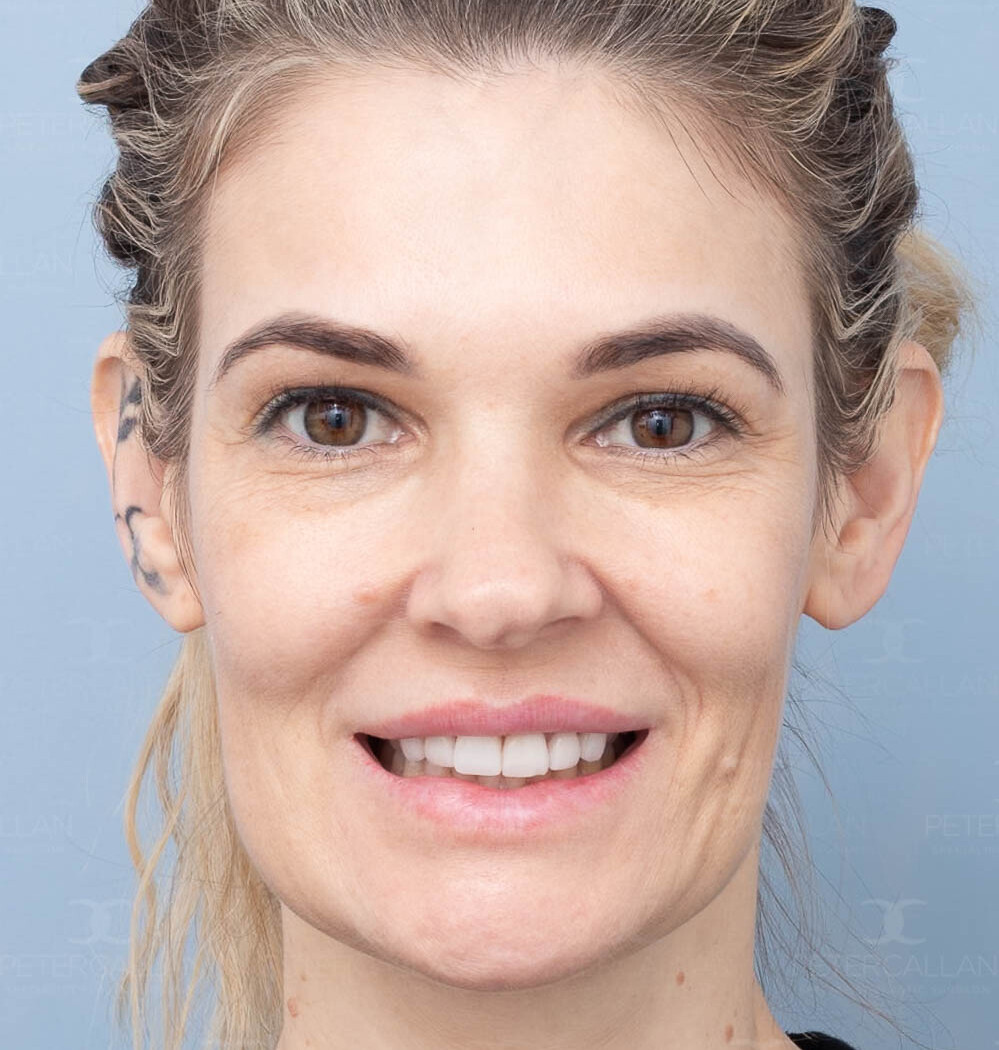
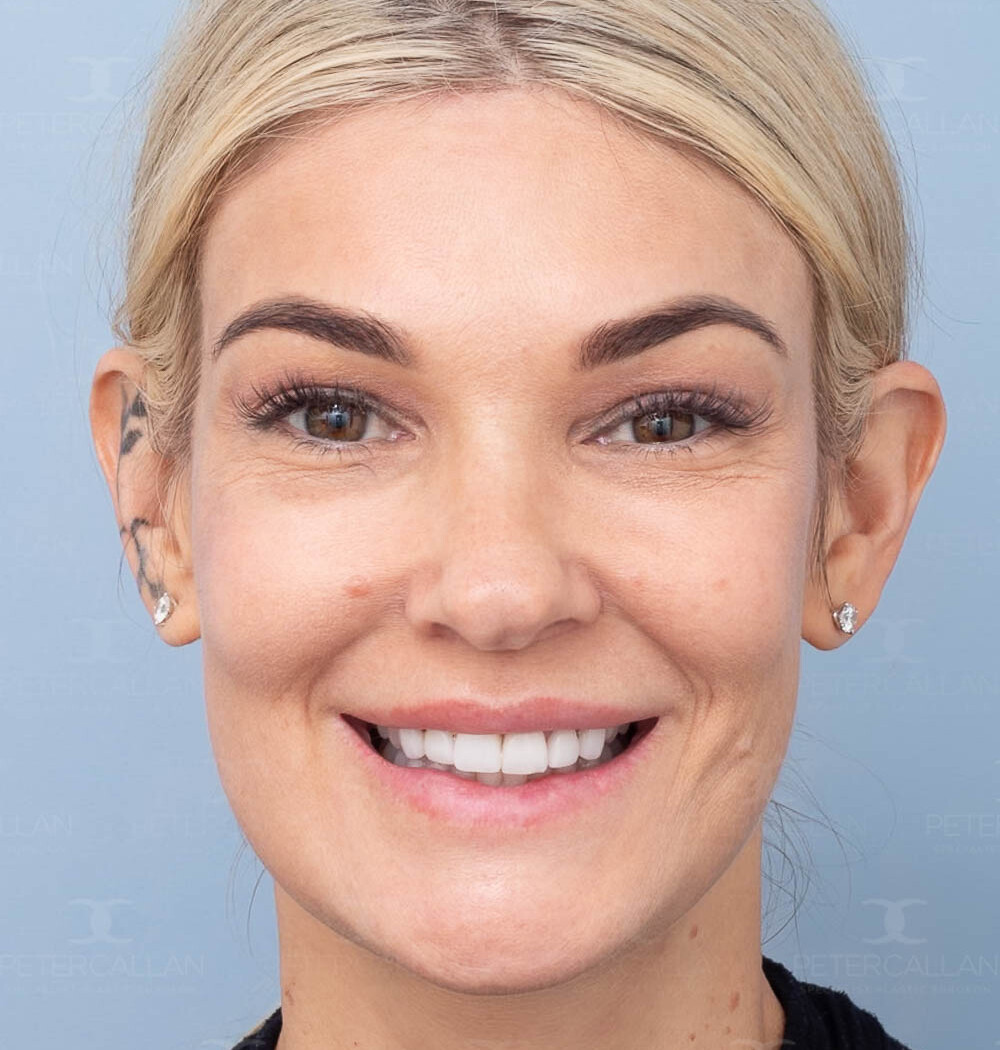
Before and After Facelift
The Face Ages in Predictable Ways—A Great Facelift Reverses Them
Ageing of the face is not random. It follows a pattern—reliable, anatomical, and predictable.
A great facelift works because it addresses that pattern directly.
Not by masking it. By reversing it.
For many people, this is not just a technical decision, but a personal one. The aim is to achieve a result that feels balanced, proportionate, and consistent with how they see themselves.
What follows reflects the approach I take in my own work—aimed at achieving a complete and harmonised result.
The Upper Face: Subtle, But Foundational
With time, the forehead lengthens and the brows descend, altering how light reaches the eyes.
A well-executed facelift accounts for this.
It restores brow position and, where appropriate, shortens the forehead and lowers the hairline. By reducing the need to constantly elevate the brows, it softens horizontal forehead lines that develop over time.
The aim is to reopen the eye area and restore proportion.
The Eyes: Less Weight, More Light
Upper eyelid skin becomes redundant. Lower lids develop bags and shadowing.
A facelift, properly understood, is a series of coordinated steps that often includes eyelid surgery.
Upper eyelids are refined to restore a clear contour
The cheek mound is elevated to support the lower eyelid
Lower eyelid fat is repositioned to restore smoothness rather than removed
The lid–cheek junction is blended into a continuous line
The result is an open, uninterrupted transition from lid to cheek.
This is an area of particular focus and, in a well-executed facelift, is addressed with care and precision.
The Midface: Lift What Has Fallen
The lower eyelid and midface function as a single unit and are best treated that way.
The midface doesn’t simply lose volume. It descends.
A great facelift respects this.
Correction follows a vertical vector—restoring the cheek mound to its natural position.
In my approach, particular attention is given to this area, as it plays a central role in how the face is perceived.
As the cheek is elevated, it supports the lower eyelid, softens the nasolabial fold, and restores central facial contour.
Particular attention is paid to:
The lower eyelid–cheek junction
The nasolabial fold
Where appropriate, refinement of upper lip length can further restore balance to the central face.
Addressed together, the transition becomes smooth and the central face regains structure.
The anatomy is consistent. Good results follow it.
The Lower Face and Neck: Restoring Definition
Changes in the lower face and neck are closely related and are best addressed together.
As tissue descends, the jawline softens and the transition into the neck loses definition. The face shifts from a more horizontal, structured appearance to one that slopes downward.
A great facelift restores this.
The jawline is redefined
The transition from cheek to chin is clarified
The neck is refined to re-establish a clean cervicomental angle
This may include redraping of skin, repositioning of deeper structures, and addressing underlying muscle banding. In many cases, deeper neck work is important to define and deepen the cervicomental angle—the angle between the underside of the chin and the neck.
The aim is continuity—from cheek to jaw to neck—for a complete and harmonised result.
Depth and Structure: Working With the SMAS
Beneath the skin lies the SMAS layer, which provides a framework for repositioning the overlying soft tissues.
A great facelift works with this layer to restore position and support where it is needed.
In my approach, this involves structured work on the SMAS in the face, combined with deeper work in the neck when required to achieve definition and balance.
The primary changes of ageing occur in the skin and fat. Working at the level of the SMAS allows these tissues to be repositioned in a controlled and cohesive way.
There are different ways of working at this level, including techniques often described as “deep plane.” The underlying principle remains the same: restoring position to achieve a lasting result.
What It Does Not Do
A great facelift is precise in what it addresses.
It does not change skin quality
It does not stop ageing
It does not change identity
It restores structure and proportion in a way that is in keeping with the individual.
The Principle Is Simple
Ageing moves tissue downward.
A great facelift moves it back.
And in doing so, restores the natural angles of the face—from downward to more horizontal.
The Best Results Are the Least Obvious
When done well, a facelift doesn’t announce itself.
It restores balance:
heaviness becomes lightness
descent becomes structure
fatigue becomes neutrality
People look like themselves—with structure and balance restored.
A great facelift is not a single manoeuvre, but a series of considered steps—each contributing to a result that is balanced, cohesive, and complete.